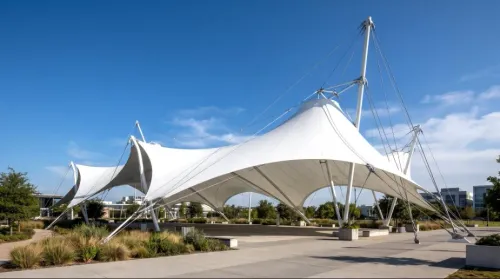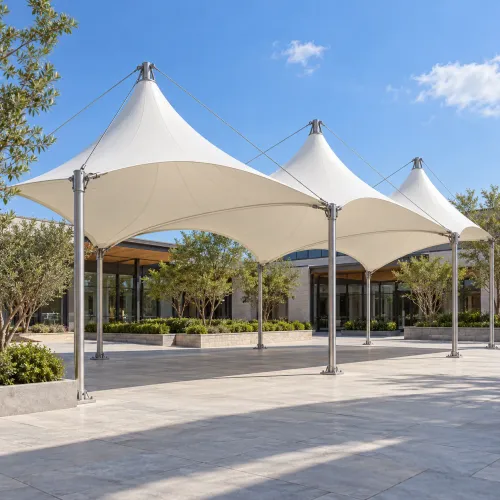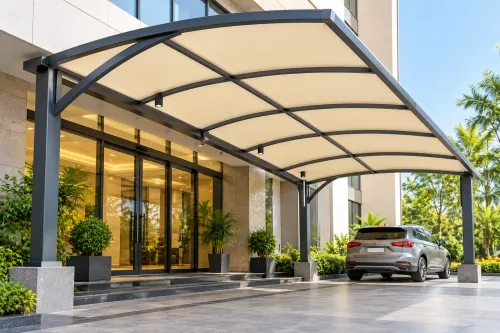
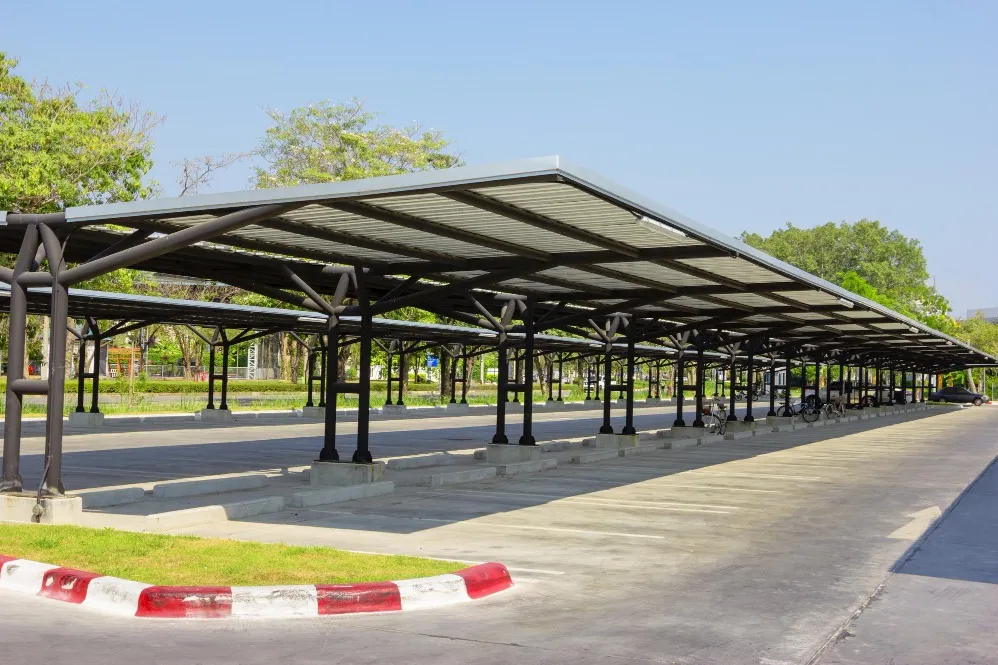
A Car Tensile Structure provides a practical way to create covered vehicle parking without constructing a conventional enclosed garage. Its lightweight architectural form can suit homes, housing societies, offices, commercial properties, institutions, and other premises where vehicles need protection from direct outdoor exposure.
In Nagpur, uncovered parking areas can remain exposed to intense sunlight for long periods. Seasonal rain, dust, leaves, and environmental debris can also affect vehicles. A properly designed tensile parking cover helps reduce this exposure while keeping the parking area open and accessible.
How a Car Tensile Structure Works
Tensile parking structures generally use a fabricated supporting system with a tensioned membrane positioned above the parking bay.
Unlike heavy roofing systems, the membrane creates coverage through its engineered form and tension. The final structure may use different roof profiles depending on available space, vehicle movement, drainage requirements, architectural preferences, and the number of cars being accommodated.
Common configurations can cover:
- Individual residential cars
- Multiple parking bays
- Apartment parking zones
- Office vehicle areas
- Visitor parking
- Commercial premises
- Institutional parking spaces
The design can be adapted according to the property rather than forcing every site into the same shape.
Coverage Dimensions Need Accurate Planning
A parking cover should protect the vehicle effectively without interfering with movement.
Before fabrication, dimensions should account for vehicle size, door opening space, driving paths, columns, boundary walls, gates, nearby buildings, and pedestrian circulation.
For multi-car installations, column placement becomes particularly important. Poorly positioned supports can make parking difficult even when the roof itself provides sufficient coverage.
Membrane Quality Influences Performance
The membrane is a key component of any tensile parking system.
Selection should consider intended outdoor use, weather exposure, expected service conditions, appearance, maintenance needs, and manufacturer specifications.
Colour can also influence the visual character of the parking space. Light-coloured membranes are commonly associated with tensile architecture because they can create a clean, contemporary appearance.
Material selection should never be based on appearance alone. Technical suitability is more important for long-term use.
Drainage Deserves Attention
Tensile roofs use their shape to manage both structural behaviour and water movement.
Low points, slopes, membrane geometry, and drainage paths need careful planning. Rainwater should be directed away from vehicles, pedestrian areas, entrances, and neighbouring properties.
A parking structure that directs water toward the driver's door or creates puddles near the vehicle may become inconvenient despite looking attractive.
Structural Fabrication Supports the Entire System
The membrane depends on a correctly fabricated supporting structure.
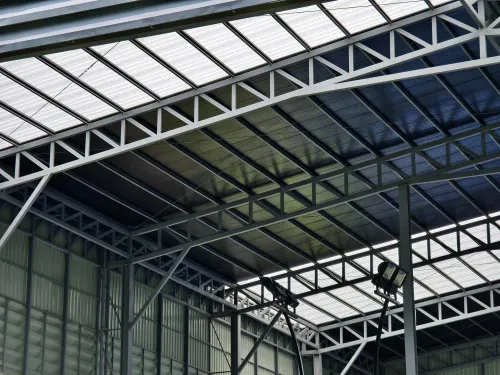
Columns, base plates, anchoring points, connections, steel members, and tensioning details must suit the project. Existing ground conditions may also influence how supports are installed.
Professional fabrication becomes especially important for larger parking areas because greater spans and multiple parking bays create more complex structural requirements.
Appearance Can Complement the Property
Parking infrastructure does not necessarily have to look purely functional.
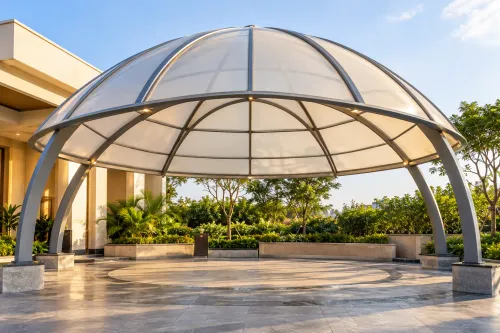
Curved roof forms can complement contemporary homes, commercial buildings, clubhouses, offices, and landscaped premises. Architects may also coordinate the parking cover with exterior finishes or broader site design.
Ditya Tensile & Fabrication provides tensile structure fabrication solutions for varied property requirements in Nagpur. Site assessment can help identify practical coverage, support placement, roof form, and installation considerations before fabrication begins.
A well-designed Car Tensile Structure should make parking more comfortable without creating unnecessary obstruction. The most effective installations combine adequate vehicle coverage, stable fabrication, suitable membrane selection, planned drainage, and convenient movement beneath the structure.
Keywords