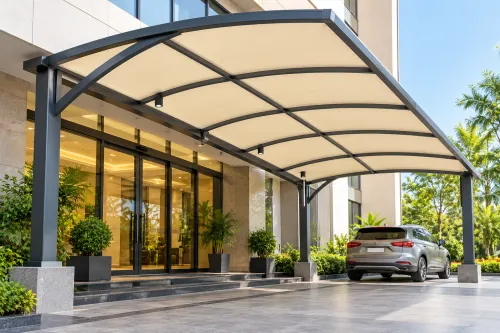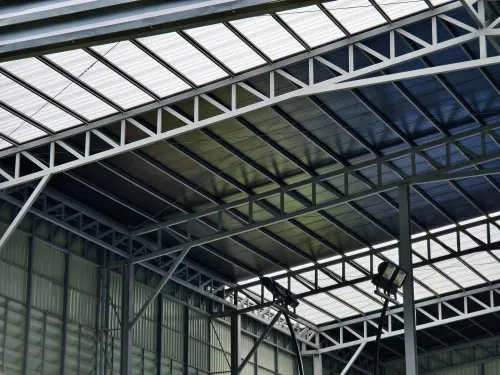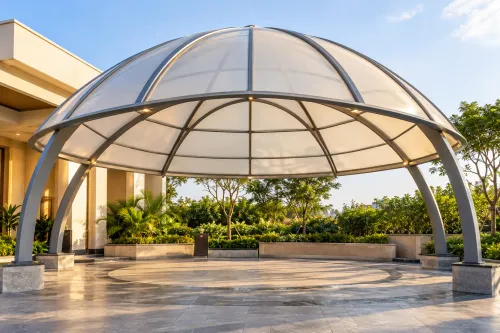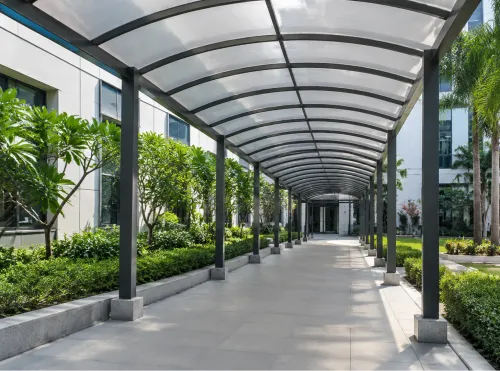
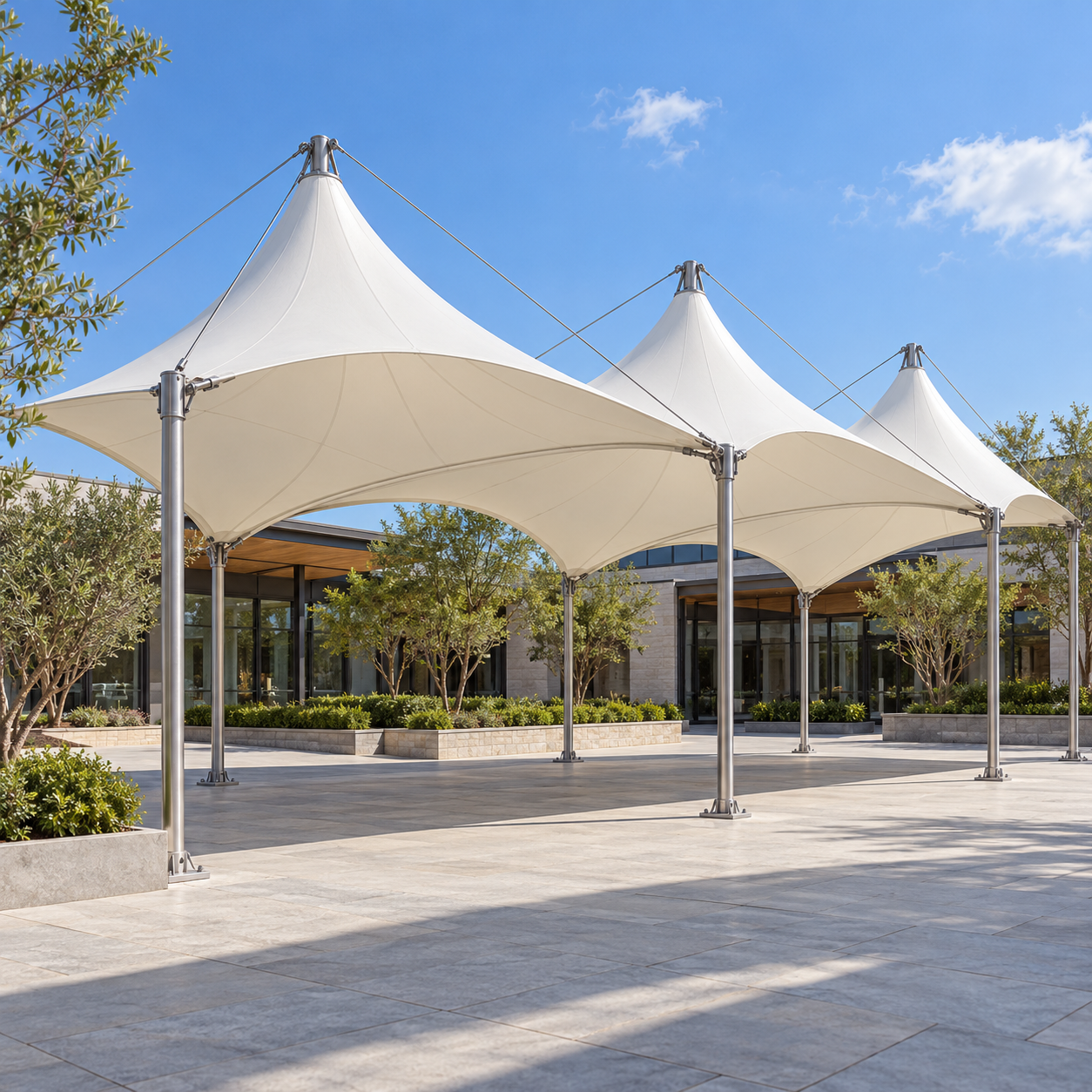
A Modular Tensile Structure Service can be useful when a project requires lightweight architectural coverage with a repeatable, adaptable structural concept. These structures can suit commercial spaces, recreational facilities, institutions, hospitality properties, parking zones, event areas, and large outdoor developments.
In Nagpur, modular tensile systems can be particularly relevant for projects where conventional heavy roofing may not provide the desired visual character or layout flexibility.
What Makes a Tensile Structure Modular?
Modularity generally refers to creating a structure from planned units or repeated structural sections that can be arranged according to the site.
Instead of treating a large covered area as one visually heavy roof, a project may use several coordinated tensile modules. This can create rhythm across the property while allowing the coverage to respond to pathways, parking bays, seating areas, or other site features.
The exact meaning of modularity should always be clarified with the fabricator because project configurations vary.
Where Modular Systems Can Work
Possible applications include:
- Commercial courtyards
- Parking areas
- Resort spaces
- School premises
- Outdoor seating
- Recreational areas
- Walkways
- Event spaces
- Institutional campuses
- Public-facing developments
The suitability depends on available space, required coverage, structural supports, and intended use.
Evaluate Expansion Possibilities
One reason customers consider modular concepts is potential adaptability.
However, future expansion should not be assumed automatically. If additional modules may be required later, that possibility should be discussed during initial structural planning.
Column positions, foundation arrangements, drainage, visual alignment, and surrounding development can influence whether expansion remains practical.
Assess the Membrane Specification
Tensile architecture depends heavily on the membrane.
Ask for clear information about the proposed material, intended outdoor application, manufacturer specifications, expected maintenance, colour, light transmission, and relevant performance characteristics.
A cheaper membrane can significantly change the overall value of the project if it does not suit the intended exposure or service conditions.
Study the Structural Framework
The elegance of tensile architecture often comes from keeping structural elements visually efficient.
That does not reduce the importance of engineering.
Columns, connections, cables where applicable, membrane attachment points, foundations, and fabricated members all contribute to structural behaviour. Each module must also relate correctly to neighbouring units.
Review Water Movement
The curved forms used in tensile structures create specific high points and low points.
These shapes should direct water toward planned discharge locations. Drainage becomes particularly important when several modules are installed close together because runoff from one section should not create problems for another.
Consider the Complete Site
A modular structure should integrate with circulation, landscaping, buildings, parking, utilities, and existing infrastructure.
Ditya Tensile & Fabrication provides customised tensile fabrication solutions for project requirements in Nagpur. Early coordination with architects, builders, contractors, or property owners can help identify suitable modules, support positions, coverage areas, and installation constraints.
A Modular Tensile Structure Service can provide considerable architectural flexibility, but the quality of the result depends on careful planning. Evaluate the module concept, membrane specification, structural system, drainage, site integration, and possible future requirements before finalising the design. The strongest solution is one that remains practical beneath the roof while creating a coherent architectural form above it.
Keywords