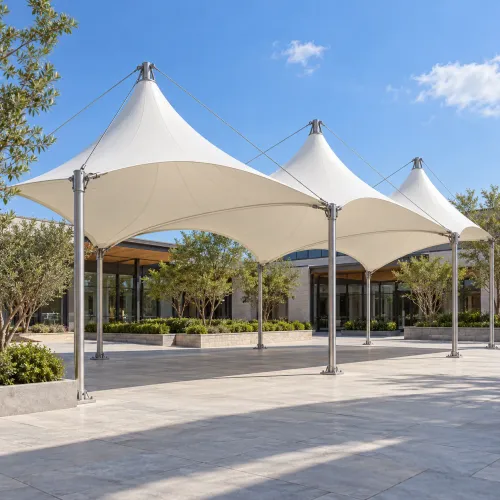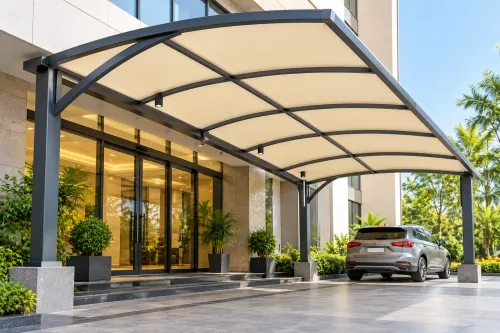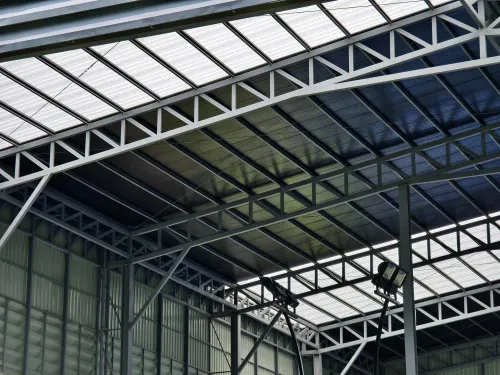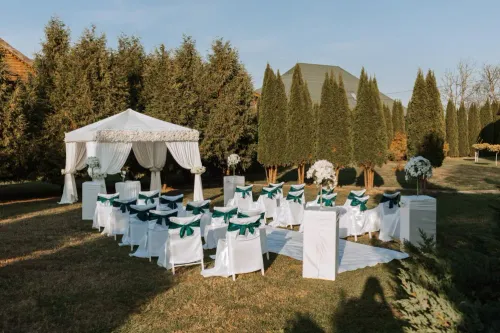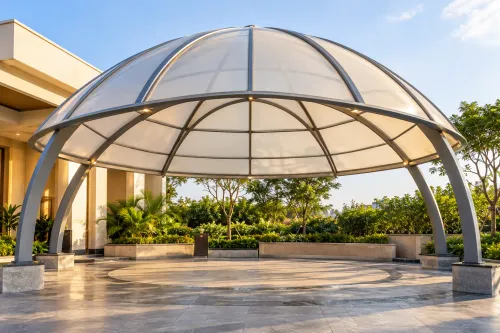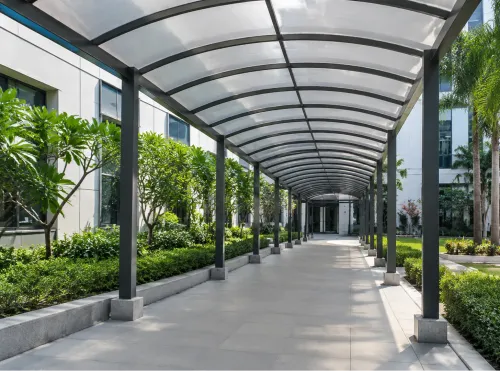
A Polycarbonate Structure is increasingly used for properties that need dependable weather protection without creating a heavy or enclosed appearance. From residential entrances to commercial pathways, polycarbonate roofing can provide a practical balance of daylight, durability, visual appeal, and structural efficiency.
For property owners in Nagpur, strong sunlight, seasonal rain, dust, and changing outdoor conditions make roofing material selection especially important. A well-planned polycarbonate installation can create a protected area while still allowing useful natural light into the space.
What Is a Polycarbonate Structure?
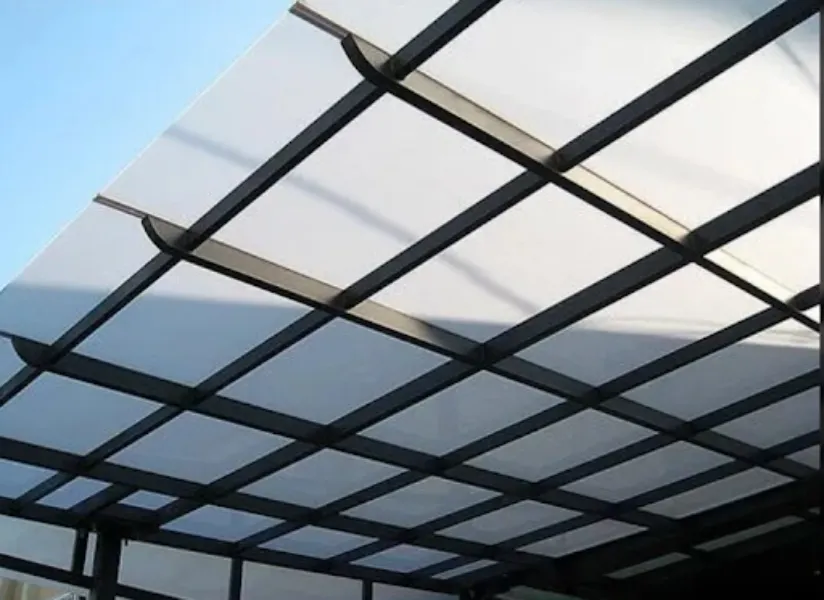
A polycarbonate structure typically combines polycarbonate roofing sheets with a fabricated supporting framework. The framework may be designed using suitable metal sections based on the dimensions, loading requirements, roof profile, and intended application.
Polycarbonate sheets are available in different configurations, thicknesses, colours, and light-transmission levels. Selecting the right specification is important because a small entrance canopy has very different requirements from a large commercial covering.
Common applications include:
- Building entrances
- Residential terraces
- Parking areas
- Walkways
- Commercial premises
- Courtyards
- Institutional buildings
- Industrial utility areas
The structure can also be designed in flat, curved, sloping, or custom architectural forms.
Why Polycarbonate Works Well for Covered Areas
One of the biggest advantages of polycarbonate roofing is its ability to provide shelter while maintaining brightness underneath.
Traditional opaque roofing may make a passage or entrance noticeably darker. Polycarbonate can allow controlled daylight to pass through, reducing the closed-in feeling often associated with conventional roofing.
Its relatively low weight can also be useful when designing supporting frameworks. However, lightweight material does not mean the supporting fabrication can be treated casually. Structural stability, anchoring, drainage, and installation quality remain essential.
Sheet Selection Requires Care
Not every polycarbonate sheet performs the same way.
Before selecting a product, consider:
- Required shade level
- Sheet thickness
- UV protection
- Expected impact exposure
- Roof span
- Supporting framework
- Heat transmission
- Desired appearance
- Maintenance accessibility
Clear sheets may provide greater light transmission, while tinted or opaque variants can offer more shade. The right choice depends on how the covered space will actually be used.
For Nagpur properties exposed to prolonged sunlight, UV-protected roofing material can be particularly relevant.
Drainage Should Be Planned Early
A visually attractive roof can still become inconvenient if rainwater management is overlooked.
The slope should allow water to move efficiently toward the intended drainage point. Gutters, outlets, sheet overlaps, sealing details, and adjoining building surfaces should be considered during design rather than added after fabrication.
This becomes especially important for entrance areas and walkways where uncontrolled runoff may create slippery surfaces.
Supporting Fabrication Matters
The polycarbonate sheet is only one part of the complete installation.
The fabricated framework needs appropriate spacing, connections, supports, surface protection, and anchoring. The design should also account for the dimensions of the covered area rather than relying on a standard frame for every project.
Ditya Tensile & Fabrication works with property owners, builders, architects, contractors, and businesses seeking fabricated covering solutions in Nagpur. A site-specific approach can help determine suitable dimensions, roof geometry, supporting members, and finishing details.
Maintenance Helps Preserve Performance
Routine inspection can extend the useful performance of the installation. Property owners should periodically check for accumulated debris, blocked drainage channels, loose components, damaged seals, or unusual movement.
Cleaning should also follow the sheet manufacturer's recommendations to avoid scratching or damaging protective surfaces.
A properly designed Polycarbonate Structure is more than a transparent roof. It is a coordinated system involving roofing material, fabrication, drainage, anchoring, and site conditions. When these elements are planned together, the result can provide reliable shelter while preserving the open character of the property.
Keywords